

Suppose there was a method to lightning-fast determine the decision deadlines for all pending Woo requests within the organization. Or to categorize all information from construction drawings in the municipality in the blink of an eye. Impossible, you say. Yet it is possible, states Martijn Aslander, initiator of the information autonomy pilot. The pilot investigates how government information can be better recorded, organized, and retrieved in the Markdown file format. ‘We are doing something fundamentally different with information here than what people are familiar with,’ he says. ‘And we are amazed every time at how fast it is moving.’ Information is not in the data itself, but in the connections between data.
Will information autonomy be the game changer for the government?
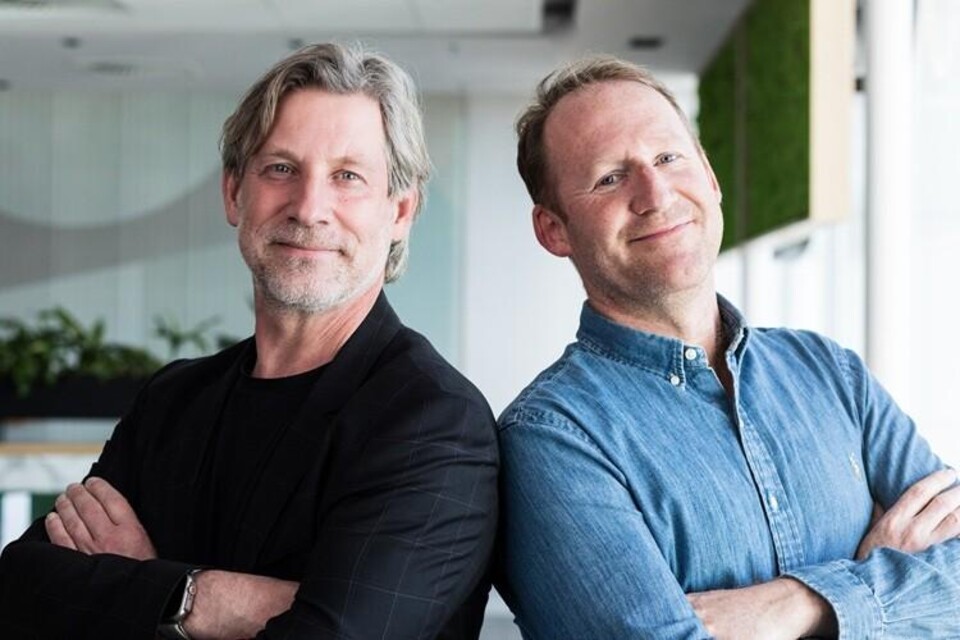
A completely different approach to information with potentially major consequences for the government. That is what the information autonomy pilot is about. Initiator Martijn Aslander and pilot ambassador Kees Verhoeven are convinced of the potential. The UWV and the police, among others, are impressed.
By handling data differently than we are accustomed to and making better use of the computer's computing power, much more is possible. This is not only what Aslander says; it is also said by entrepreneur and former Member of Parliament Kees Verhoeven, who has taken on the role of ambassador for the pilot. ‘I really feel that he hits the nail on the head,’ says Verhoeven about Aslander's initiative. Other prominent names involved in the pilot include former Government Commissioners for Information Management Bas Eenhoorn and Arre Zuurmond, and cybersecurity expert Brenno de Winter.
UWV legal experts impressed
Nico de Lange, a business consultant at the UWV, focuses among other things on supporting the implementation of the Open Government Act (Woo). ‘Due to the unstructured way of recording information, reporting is a manual and inefficient activity,’ he says. He ended up at the pilot through the UWV Information Management program. ‘To demonstrate what can easily be done with AI, one of the ‘nerds’ had an analysis performed on the public data in twenty minutes,’ he explains. ‘The result was a comprehensive dashboard with lead times, analyses, and predictions, which would have taken a data analyst weeks to complete.’ The UWV’s Legal Affairs department was impressed. ‘One of our analysts will develop this further.’
Deduplication
To understand where the enthusiasm comes from, a dive into the still-young origins of the pilot is necessary. In the autumn of 2025, Aslander built his own hyper-personal information system, ThetaOS. The first premise behind this system is that information is not contained within data, but in the connections between data. Aslander calls this informatization: connecting information with one another. The core idea behind his information system is that there is only one of everything, so that you always know what it is. He explains this using an example. ‘I wanted to get rid of Gmail, so I imported my Gmail archive, 14 GB of data. If you receive 100 emails a day, that date appears 100 times, even though there is only one January 1, 2026. The same applies to names. There is only one Kees Verhoeven, even though he appears 9,000 times in my mailbox. I make it one Kees Verhoeven. There is only one Groningen. Well, alright, there are two: a city and a province. The province is then Groningen 2. I call this process deduplication, or rigorous removal of duplicates. If you analyze and filter all the data, you can throw away 90 percent.’
© Shutterstock
New discoveries
Using the system, Aslander searches through complete war archives, making discoveries that leave those involved stunned. Pilot participant and historian Monique Brinks of WO2Net says: ‘The system unearths traces that I myself had not yet seen or could never have found. For example, it retrieves all MI5 files and finds all kinds of connections within them that Lou de Jong never knew about. I expect that a great many new discoveries will come to light in the coming years.’
Machine-readable
The second premise is that we generally use the wrong file format family, namely file formats that computers cannot read themselves. For example, you need Word to read a .docx format and Adobe Acrobat for a PDF format. According to Aslander, open source software also falls under the ‘wrong’ formats, because external software is needed for this as well to make the data machine-readable. A number of file formats belong to a different family, including Markdown, Java, HTML, .txt, JSON, and CSV. Because the computer can read these formats itself, the computing power can be utilized optimally. Aslander: ‘Why are language models so fast? Because all AI parties do store their information in the output format Markdown.’ Markdown is a modern, structured variant of the classic text file (.txt), in which formatting and metadata are included in the document itself.
The result is a database full of pieces of plain text from various sources (a lexicon), of which there is only one of each component (entities). On top of this comes a layer with optical character recognition (OCR), pattern recognition from images of texts. With the help of agentic AI, the system searches fully automatically for connections between the entities. A question like ‘how often were Martijn and Kees in Groningen?’ is therefore answered lightning fast. ‘In this process, not a single meaning is lost,’ says Aslander. ‘And because you only have one of everything, you are left with only a few hundred MB of data.’ That lack of weight is crucial. It ensures that Aslander can store complete libraries of public information on his laptop and still only use 300 MB.
Reliability
A logical question is how reliable the results are. According to Aslander, the power of agentic AI lies in cross-checking sources. ‘If you unleash multiple AI-agents on the same issues, they can cross-reference and fact-check information found from various sources. AI is good at reasoning and deducing what is what.’ To do this, he uses the Command Line Interface (CLI), the under-the-hood version of Claude. It looks like an MS DOS screen from a bygone era. Aslander records his questions, the system responds with written text.
Better insight into overlap and blind spots
‘Martijn is a Fellow of the KNVI and is putting a topic on the agenda here that improves the field. By deduplicating archives, uniquely identifying everything, and mapping not only the data but also the relationships between data, he has really hit upon something significant. It gives professionals an impetus to re-examine their work and improve their approach. Through the way he literally makes information visible, a better view of both the overlap and the blind spots in the information emerges. ‘Thanks to that approach, we see things we didn’t see before.’
Wouter Bronsgeest, co-chair of the Royal Netherlands Association of Information Professionals (KNVI)
What makes this different from retrieval-augmented generation (RAG), the retrieval of relevant information from internal data sources using language models? ‘A RAG can detect patterns, but what we do is much more elegant: designing information in an extremely structured way. My dataset is so metadata-laden and contains so many layers of evidence that I can rely on it.’ He states that only two percent of the system consists of AI.
Within the information autonomy pilot, a nine-member team is investigating, together with various government institutions, what this method can yield for the government. Participants include the UWV, the safety regions, the Tax and Customs Administration, the Police, and various archives. The pilot is funded by the participants. In the first pilot phase, it was investigated whether it is even possible to start working with the other file format family. The initial impulse is to think that one’s own organization cannot do without Word, but that turns out not to be the case. ‘Every time someone encountered an obstacle, the problem turned out to be solvable,’ says Verhoeven. ‘For example, we can black out texts perfectly well without Word software.’
Freethinker
Aslander and Verhoeven believe that the implications are enormous. Consider all the complex files the government is struggling with, from the earthquake dossier to the Child Benefit Scandal. Aslander would love nothing more than to search the recently discovered ‘vault’ of the Child Benefit Scandal. ‘I am certain that my team would uncover things there in an hour that take a hundred consultants months.’ What is needed to get the system established within the government? ‘Institutional courage. Someone has to say yes instead of no.’
Prerequisite for good police work
‘The Aslander method is about a way of thinking and data modeling in which we, as the police, maintain more control over data and information ourselves. That is incredibly important. Our colleagues must be able to quickly see what is going on and make careful decisions based on reliable information. At the same time, society must be able to trust that we handle information carefully, securely, and in accordance with the rule of law. That is precisely why information autonomy is a prerequisite for good police work for us, and why we are participating in the pilot. It helps us to approach data and information from a strategic perspective. We are proud that Martijn has committed himself to the police as a volunteer team leader.’
Anne Jan Oosterheert, Director of Digital Transformation at the Police
The question remains why a certain Martijn Aslander from the Netherlands and his team can do something that apparently escapes all the well-paid bright minds at Google or Microsoft. Verhoeven has an answer to that. ‘They have the data and computing power ‘But that too, but Martijn is a free thinker; he doesn’t think in terms of a market model.’ Software vendors have little interest in stripping data of all the ‘layers’ that customers typically pay for. Data in Markdown no longer needs to be stored in Word, metadata-tagged in SharePoint, or analyzed by Copilot. For the European pursuit of digital autonomy, information autonomy is potentially a game changer. There are other sectors for whom the method is potentially bad news, with the consultancy industry leading the way.
Abuse?
Can the system also be abused? What can cunning cybercriminals do with this? Or what if Aslander himself decides to blackmail people with knowledge he uncovers? He thinks for a long time. ‘I think my role in society has always been to explain these kinds of technologies and show what happens, even if it is undesirable. Otherwise, we cannot reflect on how we want to relate to them.’ Verhoeven, by his own account someone who is usually inclined to think in terms of risks, feels little resistance in this specific case. ‘Let’s make good use of the opportunities to deploy information effectively with a number of large government organizations, allowing us to get further with fewer people. After twenty years of ICT misery within the government, I find that a nice idea.’
More information autonomy
The information autonomy pilot is running in six-month phases. The next phase ends on November 30. If there is sufficient interest, there will be a follow-up.
On June 26, the book ‘Informatieautonomie: De vermisteconditie voor dataovereiniteit in eentijdperk van vendor lock-in en AI’ by Martijn Aslander was published.
This article was also published in iBestuur Magazine #59

Plaats een reactie
U moet ingelogd zijn om een reactie te kunnen plaatsen.